Skip to content

Launch — Custom Software

Custom Software Development

Internal tools, customer portals and business platforms built by senior developers — architected to last, then hosted and supported by the same team that wrote the code.

Is this you?

Signs you’ve outgrown off-the-shelf tools.

Custom software makes sense when the workarounds cost more than the build. If an existing tool covers 90% of what you need, buy it.

  • Your team runs on spreadsheets that break as you grow
  • Workarounds in the software you bought cost hours every week
  • The same data gets typed into three different systems
  • Getting your data out of your current tool feels impossible
  • A previous developer built something nobody can safely change
  • You’re paying for five tools that don’t talk to each other

What we build

Five kinds of software we build most.

Software shaped around your operations, not the other way around. Pick the one closest to the problem you’re trying to solve.

Internal tools

Admin panels and operations tools that replace spreadsheet sprawl.

What it is

The software your team works in all day — admin panels, job trackers, scheduling and quoting tools — built around how your operation actually runs, not how a vendor imagined it.

Typical features
  • Role-based logins and permissions
  • Forms that replace spreadsheet tabs
  • Search, filters and bulk actions
  • Audit trail of who changed what
Best for

Teams copying data between spreadsheets, email and two or three SaaS tools just to get one job done.

Often paired with
  • CRM and accounting integrations
  • Reporting dashboards

Buy or build

When off-the-shelf stops working.

Buying is often the right answer, and we’ll tell you when it is. Here’s where that stops being true.

Time to start
Off-the-shelf SaaSSign up today and start using it
Custom softwareMost projects launch in 4–10 weeks
Fit to your workflow
Off-the-shelf SaaSYou change your process to match the tool
Custom softwareThe tool is built around your process
Workarounds
Off-the-shelf SaaSSpreadsheets and copy-paste fill the gaps
Custom softwareThe gaps become the features
Integrations
Off-the-shelf SaaSWhichever connectors the vendor chose to build
Custom softwareConnected directly to your CRM, accounting and operations tools
Your data
Off-the-shelf SaaSLives in the vendor’s system, exported on their terms
Custom softwareYour database and your accounts, fully portable
Cost over time
Off-the-shelf SaaSLow to start; per-seat fees grow with your team
Custom softwareAn upfront build, then hosting and support you control
Best when
Off-the-shelf SaaSA tool already covers 90% of what you need
Custom softwareYour workflow is your advantage, or workarounds eat real hours

Related work

Where we’ve done this before.

#Website#Partner portal#Internal CRM#OCR-first document intake

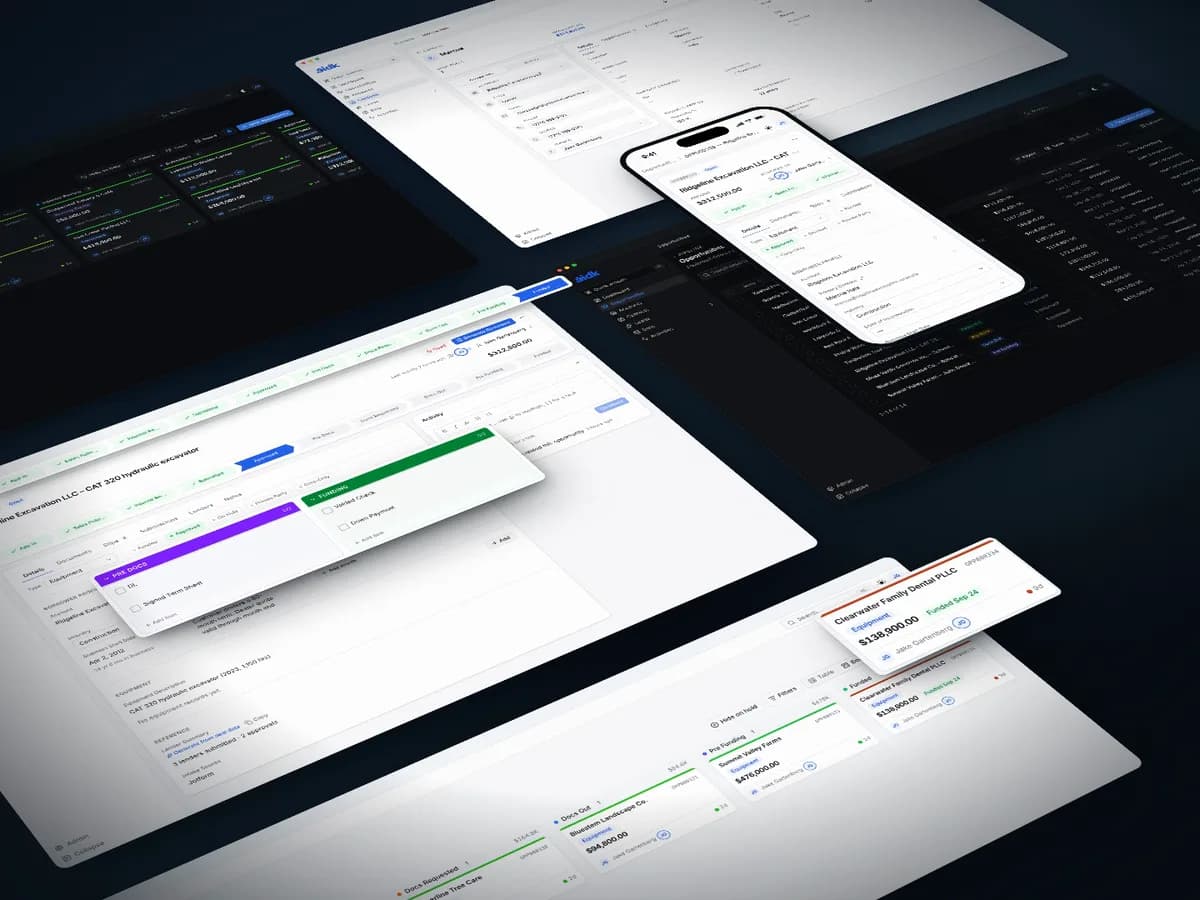
Golden Capital – a website, dealer portal and CRM for equipment financing

We designed and built Golden Capital's website, an invite-only portal where equipment dealers track their deals, and the internal CRM that carries each deal to funding.

Client
Golden Capital
Industry
Commercial equipment financing
Stack
Next.js · React · TypeScript · Tailwind CSS · shadcn/ui · Supabase
  • Website, dealer portal and internal CRM, designed and built by Altius
  • Invite-only portal with multi-factor sign-in and a full audit log
  • OCR-first document intake, with AI only where OCR falls short

How we build

From first conversation to software in production.

Scoped against real workflows, shipped in usable slices, then hosted and supported by the people who wrote the code.

  1. 01

    Discovery & scoping

    We map your workflows, interview the people who’ll use the system daily and define a scope that solves the real problem — not a wish list.

  2. 02

    Architecture & design

    Data models, integrations and UX designed together, so you approve clickable screens and a technical plan before any code is written.

  3. 03

    Build in slices

    Development ships in usable increments you test with real workflows, so feedback lands mid-build, not after launch. Automated tests and QA run throughout.

  4. 04

    Launch & migrate

    Load checks and security review, then data migration, team training and a staged cutover that doesn’t interrupt day-to-day operations.

  5. 05

    Support & evolve

    Managed hosting, monitoring and a roadmap of improvements. We stay accountable for the system in production, not just for how it demoed.

The stack

A proven stack, chosen for maintainability.

Proven, well-supported technology — so the next developer to touch your code is glad they did.

  • Next.js
  • React
  • TypeScript
  • Tailwind CSS

FAQ

What to ask before building custom software.

Something else on your mind? Ask us directly.

01How much does custom software cost?

Every project is scoped individually — the number of user roles, integrations and workflows drives the budget more than anything else. We scope before we quote, so the estimate reflects your actual project instead of a generic range. Share a rough budget range on our contact form and we’ll come back within 24 hours with a scoped estimate.

02How long does a custom software project take?

Most projects launch in 4–10 weeks. Larger platforms with complex integrations or data migrations run longer, but we ship in usable slices — so you’re testing working software within the first few weeks, not waiting months for a big reveal.

03Custom or off-the-shelf — how do I know which I need?

If an existing tool covers 90% of what you need, buy it — we’ll tell you that on the first call. Custom makes sense when workarounds are eating real hours, when your workflow is your competitive advantage, or when you’re paying for five tools that don’t talk to each other.

04Who owns the code?

You do. Full ownership of the code, the data and the infrastructure accounts. If you ever want to move to another team, everything is documented and portable — no lock-in, no hostage negotiations. We’d rather keep you because the work is good, not because leaving is hard.

05What happens after launch?

We host, monitor and maintain what we build — automated backups, security patching and ongoing support. Most clients stay on for ongoing improvements, but support is a service, not a trap: you can take everything in-house whenever you want.

06Can you take over software another developer built?

Usually, yes. We start with a code audit to see what’s salvageable, then give you an honest recommendation: stabilize and extend, rebuild incrementally or, in rare cases, start fresh. You’ll know the tradeoffs before spending anything on the work itself.